Send a supplier the line “how much is your coconut milk powder in bulk” and you will usually get one of three things back: a slow reply, a list of questions, or a price that means very little because it is missing half the picture.
The buyers who get fast, accurate quotes are the ones who arrive prepared. They already know what the powder is for, how much they need, and what has to be true before they can commit. This guide walks through how to source bulk coconut milk powder in Malaysia the same way, so your first enquiry does most of the work.
What To Prepare Before You Request A Bulk Quote
Before you contact anyone, get six things straight: your application, your volume, your preferred packing format, your delivery destination, the documents you will need, and your timeline. A supplier can quote confidently once those are on the table.
The reason is practical. Coconut milk powder is not a single product with one price. Cost and availability shift with the pack format, the order size, the fat profile a buyer expects, and how often they plan to reorder. When those details are missing, a supplier either quotes wide to protect themselves or stops to ask, and both slow you down. A prepared enquiry removes that friction and tells the supplier you are a serious buyer, which usually earns a more considered response.
Define Your Application And End Use
Start with what the powder is actually for, because the end use shapes almost every other answer in your enquiry. A beverage plant, a bakery, and a ready-meal manufacturer are all buying “coconut milk powder,” but they are rarely buying the same thing.
For Beverage Production
If you are blending drinks, mixability and how the powder behaves once reconstituted tend to matter most, so those are worth raising early with a supplier. Mention whether the drink is served hot or cold and whether it is mixed fresh or pre-blended, since that shapes what you should ask about.
For Bakery And Confectionery
A bakery folding coconut into batters, fillings, or coatings is often more concerned with consistency batch to batch and how the powder performs under heat. Tell the supplier where it goes in your process, whether that is a dough, a filling, or a topping, so they can suggest a grade that holds up.
For Ready Meals And Sauces
Ready-meal and sauce producers usually care about how the powder carries flavour and body through cooking and holding. Let the supplier know whether the product is cooked, retorted, or chilled, because those conditions change what matters in the powder you choose.
A plain description of the application is enough to start a useful conversation: what you are making, roughly how the powder gets used in your process, and any characteristic that matters to your finished product. That lets the supplier point you to a suitable grade instead of guessing.
It also protects you later. When you describe the end use up front, any samples you receive can be assessed against your real production conditions rather than a generic taste test. If you are supplying food-service kitchens or repacking for other buyers, say so, because that can change the pack format and documentation that suits you best.
Fat Content And Composition
Fat content drives price and performance in coconut milk powder more than almost any other variable, so decide what you need before you enquire. Powders are commonly supplied across a range of fat levels, and the right one depends entirely on what you are making.
- Lower fat, around 30 to 40 percent: Suits lighter beverages and baked goods where coconut sits in the background rather than leading the flavour.
- Higher fat, around 60 to 65 percent: Suits rich curries, rendang, premium ice cream, and heavy sauces where body and richness carry the dish.
State your target fat content in the enquiry rather than leaving the supplier to guess, because it changes both the quote and the grade they recommend. If you are not sure, describe the finished product you are aiming for, ask which fat level they would suggest, and confirm the exact specification in writing before you commit to volume.
Estimate Your Volume And Order Timeline
Give the supplier a volume range and a timeline, even a rough one. “A few hundred kilograms to start, then a recurring monthly order if the first run goes well” is far more useful than “bulk.”
Separate your initial trial quantity from your expected ongoing volume. Suppliers often treat a one-off pilot order differently from a standing monthly commitment, and being clear about which you are discussing helps them quote the right scenario. If your demand is seasonal or tied to a product launch, share the forecast schedule so capacity and lead time can be planned around it.
Timeline matters just as much as quantity. Let the supplier know when you need the first delivery and how firm that date is. A buyer who needs stock in three weeks and a buyer planning a launch next quarter should expect different conversations, and naming your timeframe early avoids a quote built on the wrong assumption.
Confirm Packing Format And Delivery Details
Confirm pack-size availability directly with the supplier rather than assuming it. Coconut milk powder is sold in everything from small retail sachets to professional and bulk packs, and not every format is offered at every order size, so ask what is available for the volume you have in mind.
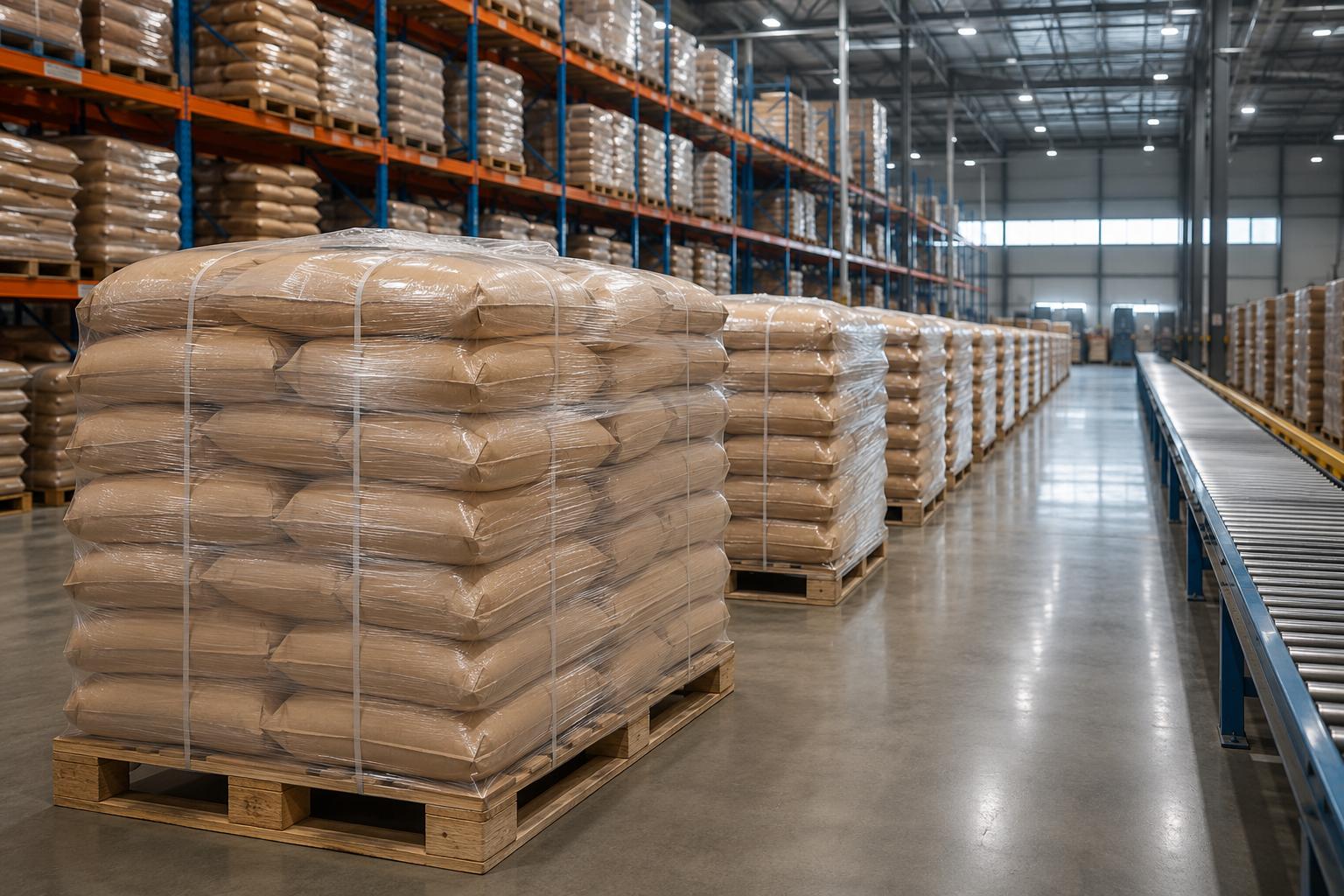
In industrial supply, bulk coconut milk powder typically ships in 20kg or 25kg multi-layer kraft paper bags fitted with an inner plastic liner to guard against moisture pickup. Ask how those bags are palletised, how many fit a standard pallet, and what quantity makes up a full 20ft container load, since that shapes your freight cost per kilogram, your storage planning, and how much you should order at once.
Think about how the format fits your operation. Larger bulk packs can lower handling per kilogram but need suitable storage and stock rotation, while smaller professional packs are easier to portion in a busy kitchen. Tell the supplier how you store and use the product, and let them recommend a format that matches.
Delivery is the other half of this. Confirm your delivery destination within Malaysia, whether you can receive full pallets or need smaller drops, and what lead time applies once an order is placed. Clarifying this early keeps the quoted price and the delivered price closer together.
Questions To Ask A Potential Supplier
Treat supplier proof as a set of questions, not assumptions. You cannot verify a claim you never asked about, so build these into your enquiry and judge the answers you get back.
- Halal certification: Is the facility JAKIM-certified, and can they provide a current certificate? For most food manufacturing lines in Malaysia this is non-negotiable, so confirm it before anything else.
- Food safety standards: Do they hold MeSTI, HACCP, or GMP certification under Ministry of Health Malaysia requirements, and are those certificates still valid?
- Documentation: What product specifications, ingredient and allergen information, and certificates can they supply with an order?
- Samples and specs: Can they send a representative sample with a matching specification sheet, so you can test the powder against your own process before committing to volume?
- Fat content and grade: Which fat levels can they supply, and can they confirm the specification in writing?
- Capacity: What is their production capacity, and how do they handle repeat monthly orders? A supplier who can cover a trial run may still need lead time to sustain ongoing demand.
- Consistency: How do they manage batch-to-batch consistency, and what happens if a delivery does not meet the agreed specification?
The quality of these answers tells you as much as the price does. A supplier who responds with clear documentation and specifics is easier to build a supply relationship with than one who answers in generalities.
Explore Industrial Coconut Supply From S & P Industries
If you are sourcing for a food, beverage, or bakery operation and want to put these questions to an established Malaysian manufacturer, you can review the bulk and industrial coconut product supply from S & P Industries and enquire directly.
Coming to that conversation with your application, volume, packing, destination, documents, and timeline already prepared means you can get to a meaningful quote and the right product grade far more quickly.
Your Bulk Sourcing Checklist
Use this as a quick reference before you send an enquiry:
- Application and end use
- Target fat content
- Estimated volume, both trial and ongoing
- Preferred packing format
- Delivery destination and lead time
- Required documents and certificates
- Timeline for first delivery
- Your contact person and company details
Turning A Prepared Enquiry Into A Better Quote
Sourcing bulk coconut milk powder in Malaysia comes down to how well you brief the supplier. The buyers who prepare their application, volume, packing, destination, documents, and timeline get quicker replies, more accurate pricing, and a clearer read on whether a supplier fits.
Put that preparation to work and take it to the bulk and industrial coconut product supply from S & P Industries when you are ready to enquire, so the first exchange moves you closer to a decision instead of back to more questions.
Copy And Paste Enquiry Template
Short on time? Lift this straight into an email and fill in the brackets:
“We are looking to source bulk coconut milk powder for a [beverage / bakery / ready meal] application. Our initial trial volume is [X] kg, with an estimated ongoing volume of [Y] metric tonnes per month. We require [high / low] fat content packed in [25kg bags / bulk packs]. Please provide a quote inclusive of delivery to [location in Malaysia], and confirm whether you hold JAKIM Halal certification and current food safety certification.”
Send that, and the questions below are usually the only ones left to settle.